LOS ALTOS, Calif. — Atera Medical, a medical technology company developing precision tools for fertility preservation and restoration, announced today that it has received a multi-year award from the National Institutes of Health (NIH). The project, conducted in collaboration with Northwestern University and the University of Michigan, will advance Atera's technology for improving fertility preservation in cancer survivors through ovarian tissue cryopreservation (OTC).
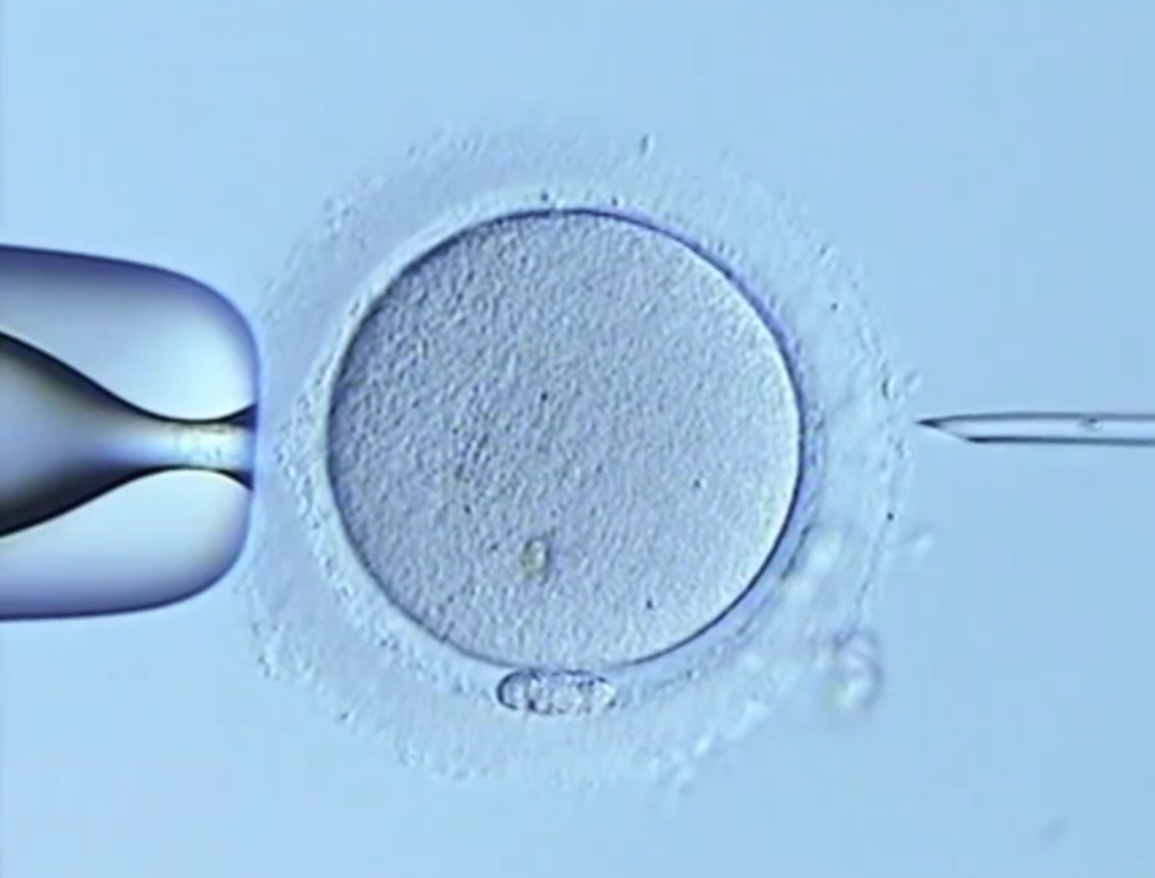
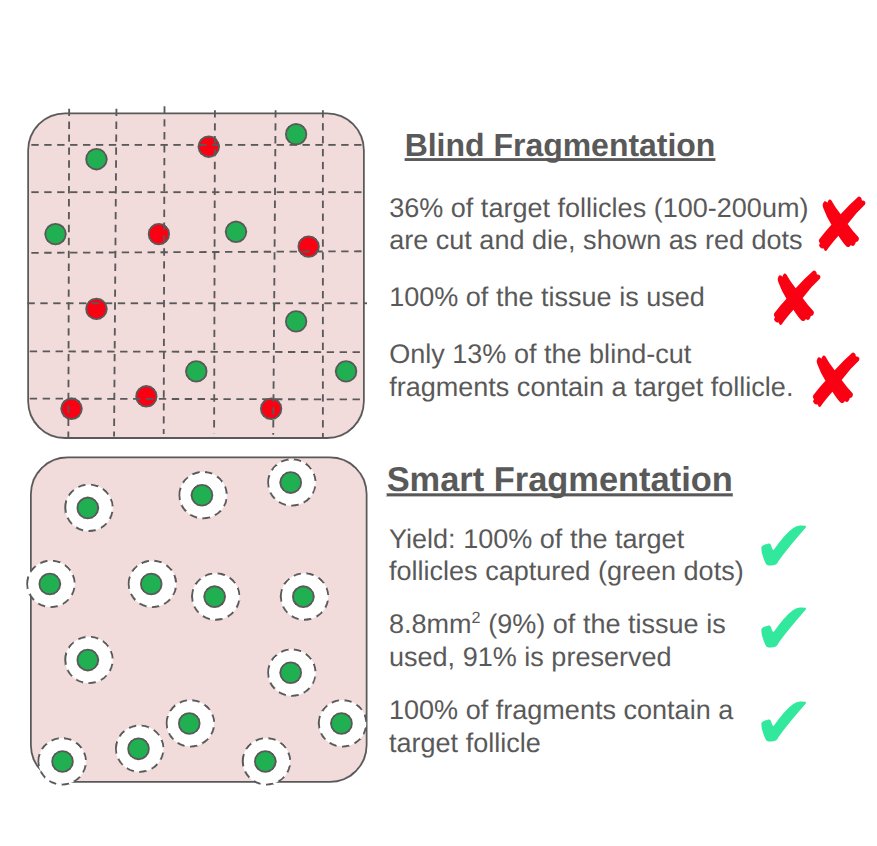
Follicles are the structures within the ovary where eggs develop and ultimately mature for ovulation. Together, they make up a woman's ovarian reserve. Cancer treatment can significantly damage this reserve (gonadotoxic), leading more patients to consider ovarian tissue cryopreservation before treatment. Yet there is a fundamental limitation: the follicles within ovarian tissue are too small to be seen with conventional clinical ultrasound. As a result, clinicians have limited ability to determine which areas of tissue contain the greatest follicle reserve before the tissue is divided and preserved. This can lead to substantial variability in the amount of reproductive potential captured from one tissue sample to another and, ultimately, in the potential for restored fertility following transplantation.
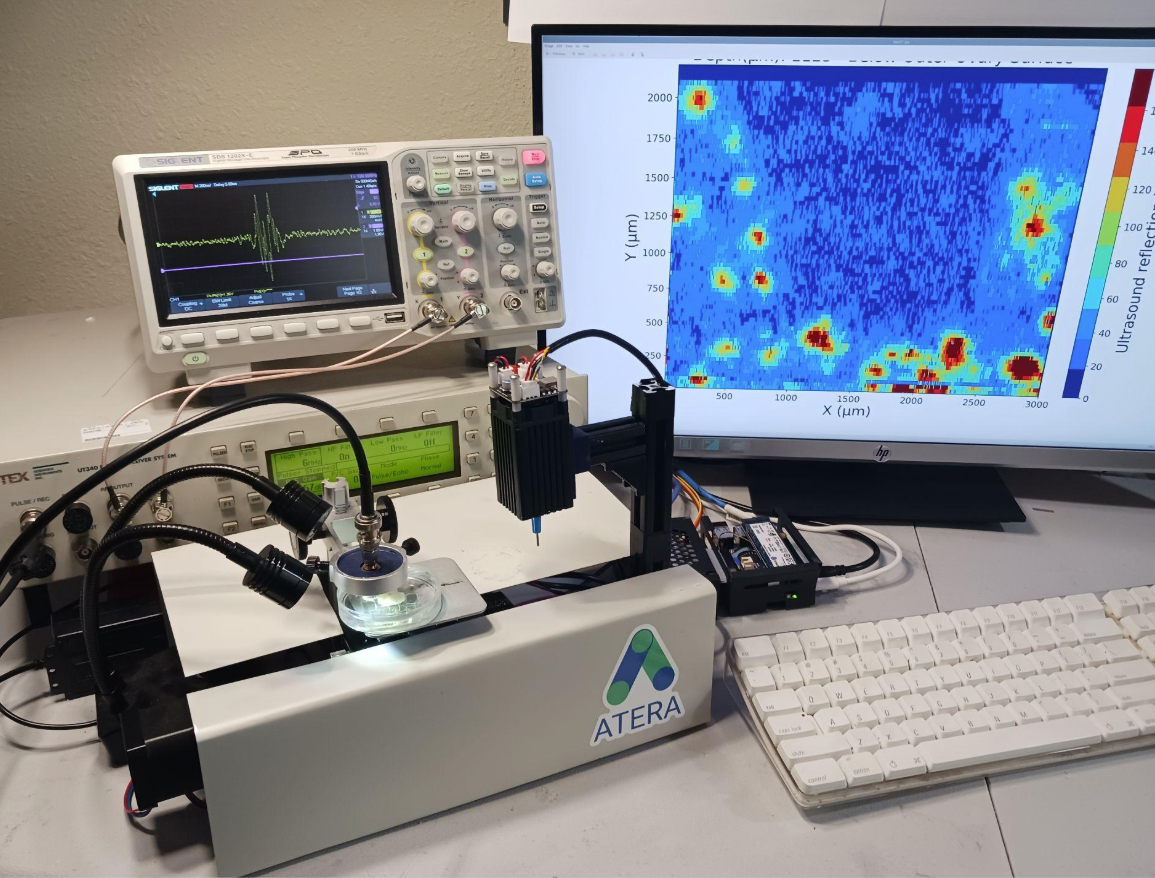
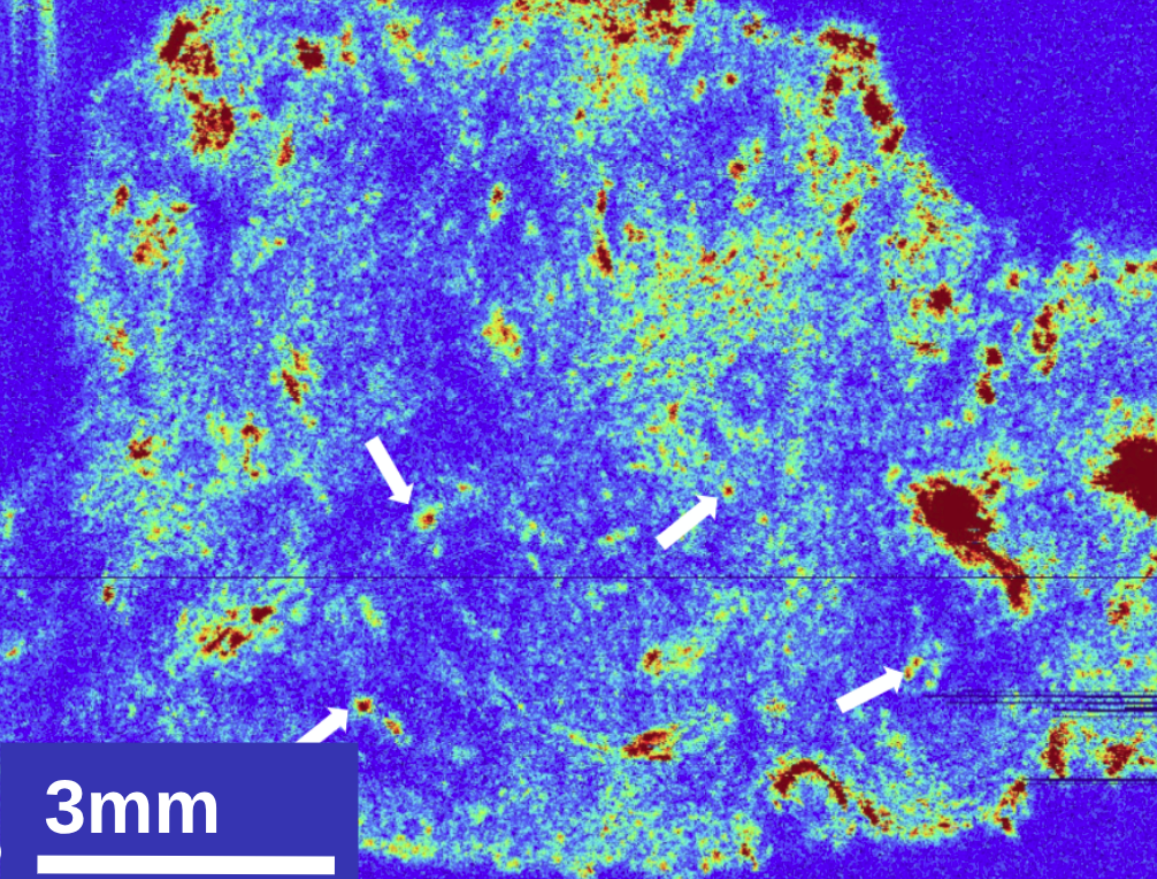
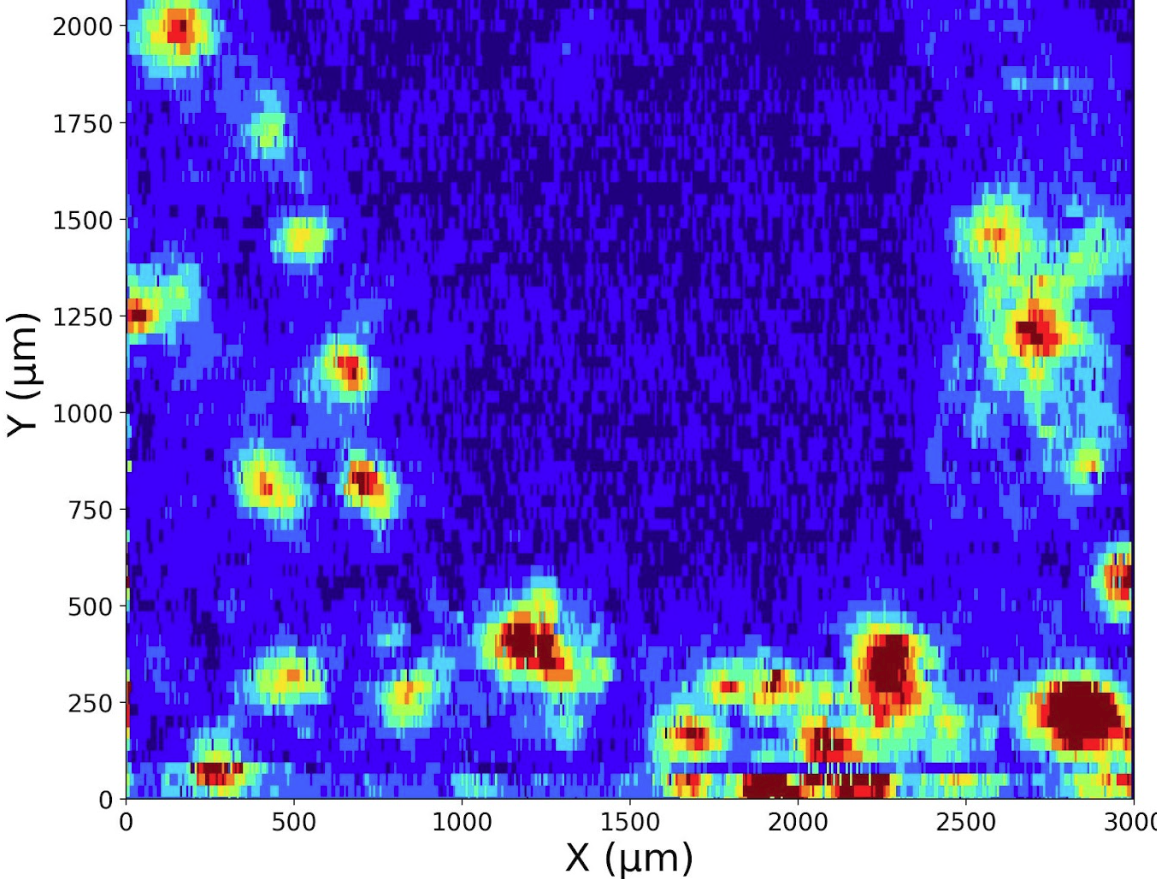
Atera is developing an approach designed to address this problem by combining high-resolution ultrasound microscopy with AI-guided precision robotics. In preliminary studies, Atera's precision-guided tissue selection produced a 70-80% increase in captured eggs compared with standard blind-cut tissue controls.
Bringing Greater Precision to Fertility Preservation
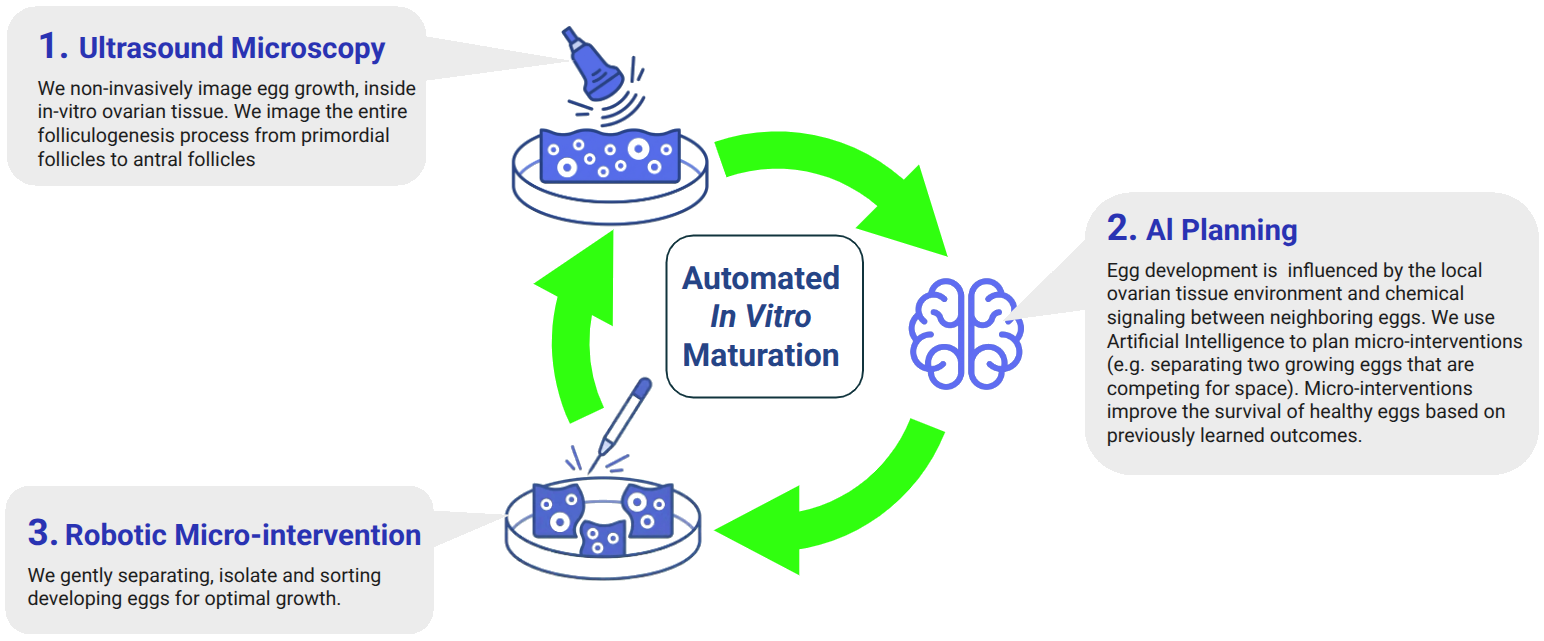
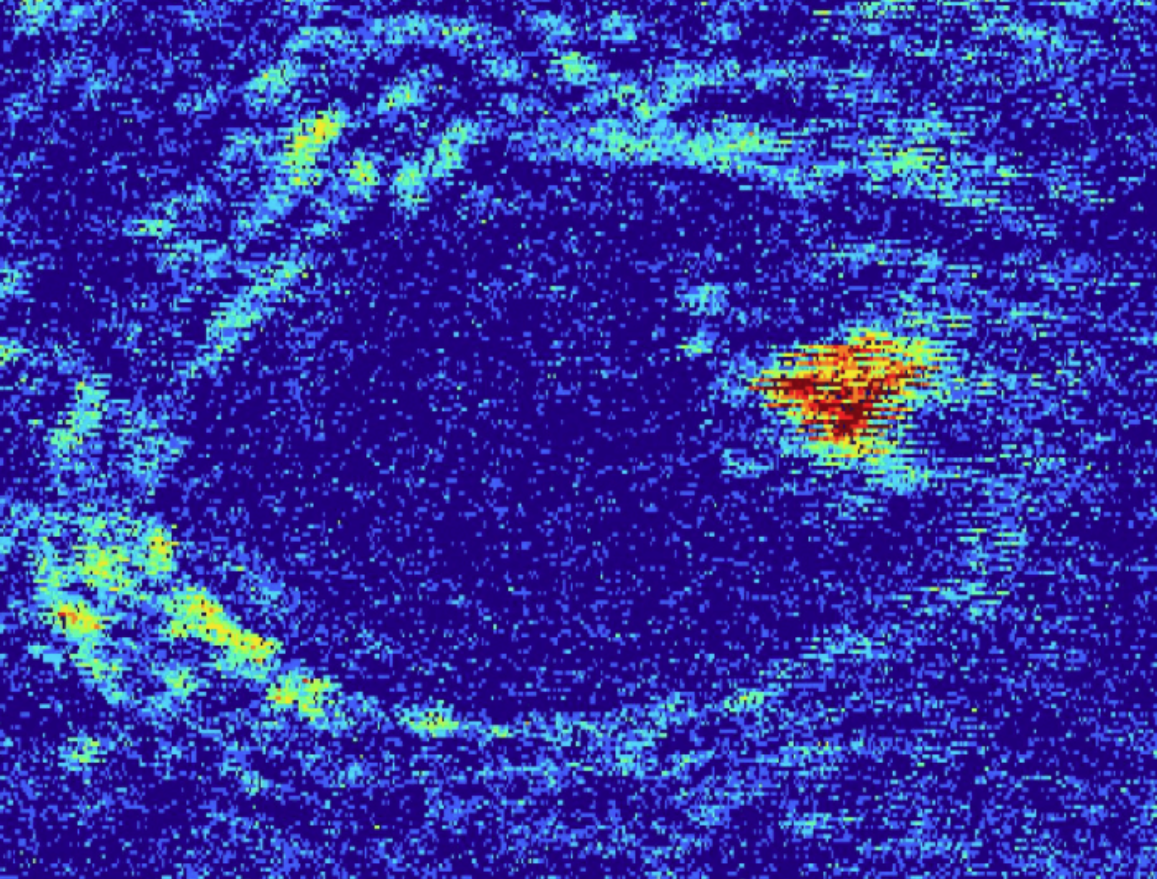
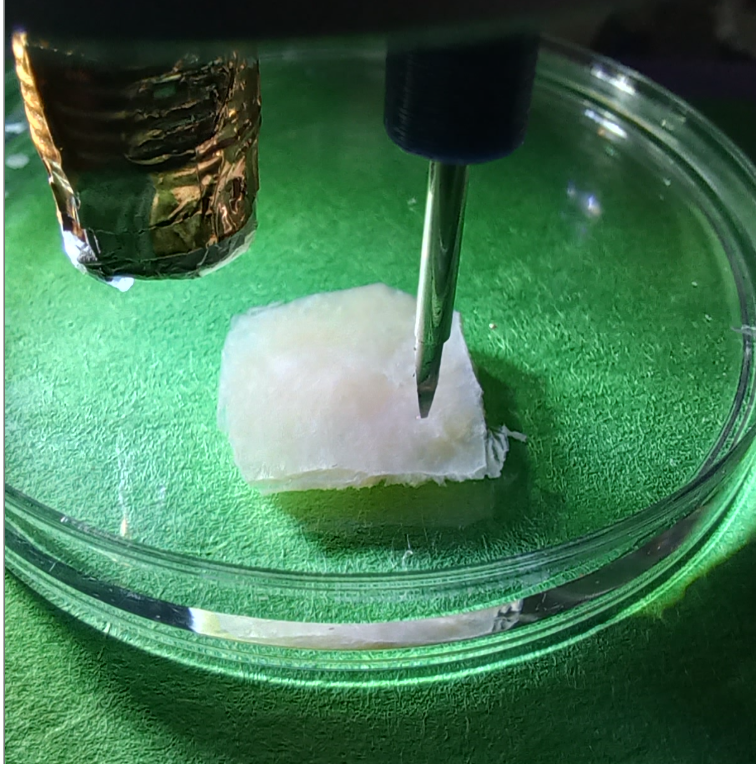
Atera's technology is designed to provide information that conventional clinical ultrasound cannot. Its high-resolution acoustic imaging system maps follicles within ovarian tissue, while AI-guided robotics uses that information to identify and precisely section regions with greater follicle density.
The approach combines three key capabilities:
- Follicle mapping: High-resolution acoustic imaging identifies the distribution of follicle reserve within ovarian tissue.
- AI-guided tissue selection: Software analyzes the imaging data to identify regions of higher follicle density.
- Precision robotics: The system translates this information into controlled tissue-cutting patterns designed to recover follicle-rich regions more consistently.
Together, these technologies are intended to replace a largely blind tissue-selection process with a more informed, precise, reproducible approach that can ultimately be integrated into clinical workflows.
NIH Support to Advance Development
The multi-phase NIH award will support continued development of Atera's imaging and robotic technologies, optimization of system speed and workflow, and preclinical validation in collaboration with Northwestern University and the University of Michigan.
"Our goal is to bring greater precision and consistency to the complex process of preserving fertility from ovarian tissue," said James O'Keeffe, Ph.D., Founder and CEO of Atera Medical. "By combining high-resolution imaging with precision robotics, we are developing a way to identify where the reproductive potential is within the tissue before it is preserved. This NIH award will allow us to further develop and validate the technology as we work toward clinical application."
The NIH award provides non-dilutive support for the program as Atera advances its technology toward clinical use. The company is also preparing for a seed financing round to support continued development and future commercialization.
Building a Technology Foundation for Reproductive Medicine
Atera's initial focus is fertility preservation and restoration, where the need for more precise tissue characterization is particularly clear. The underlying combination of high-resolution acoustic imaging, computational analysis, and precision robotics may also have applications in other areas of tissue processing and reproductive medicine as the technology develops.
About Atera Medical
Atera Medical is a California-based medical technology company developing precision technologies for fertility preservation and restoration. The company combines high-resolution acoustic microscopy, computational imaging, and precision robotics to develop tools for applications in reproductive medicine and tissue processing.
James O'Keeffe, Ph.D., Founder and CEO, brings extensive experience in robotics and biomedical engineering and previously pioneered microfluidic DNA detection technologies at NASA Ames Research Center.
Michaela Kilander, Ph.D., PMP, Chief Science Officer, earned her doctorate from Karolinska Institute and brings research experience in reproductive biotechnology, including advanced in-vitro maturation of human eggs.
Research reported in this press release is supported by the Eunice Kennedy Shriver National Institute of Child Health and Human Development (NICHD) of the National Institutes of Health (NIH) under Award Number 1R61HD123526-01. The content is solely the responsibility of the authors and does not necessarily represent the official views of the National Institutes of Health.